Short answer: A stop tap usually won't turn because limescale and corrosion have seized it after years without use. Do not force it with a wrench, because old brass valves can snap. Try gentle back and forth movement. If it still will not move, use isolation valves near the leak or the outside stop tap, then have the valve replaced.
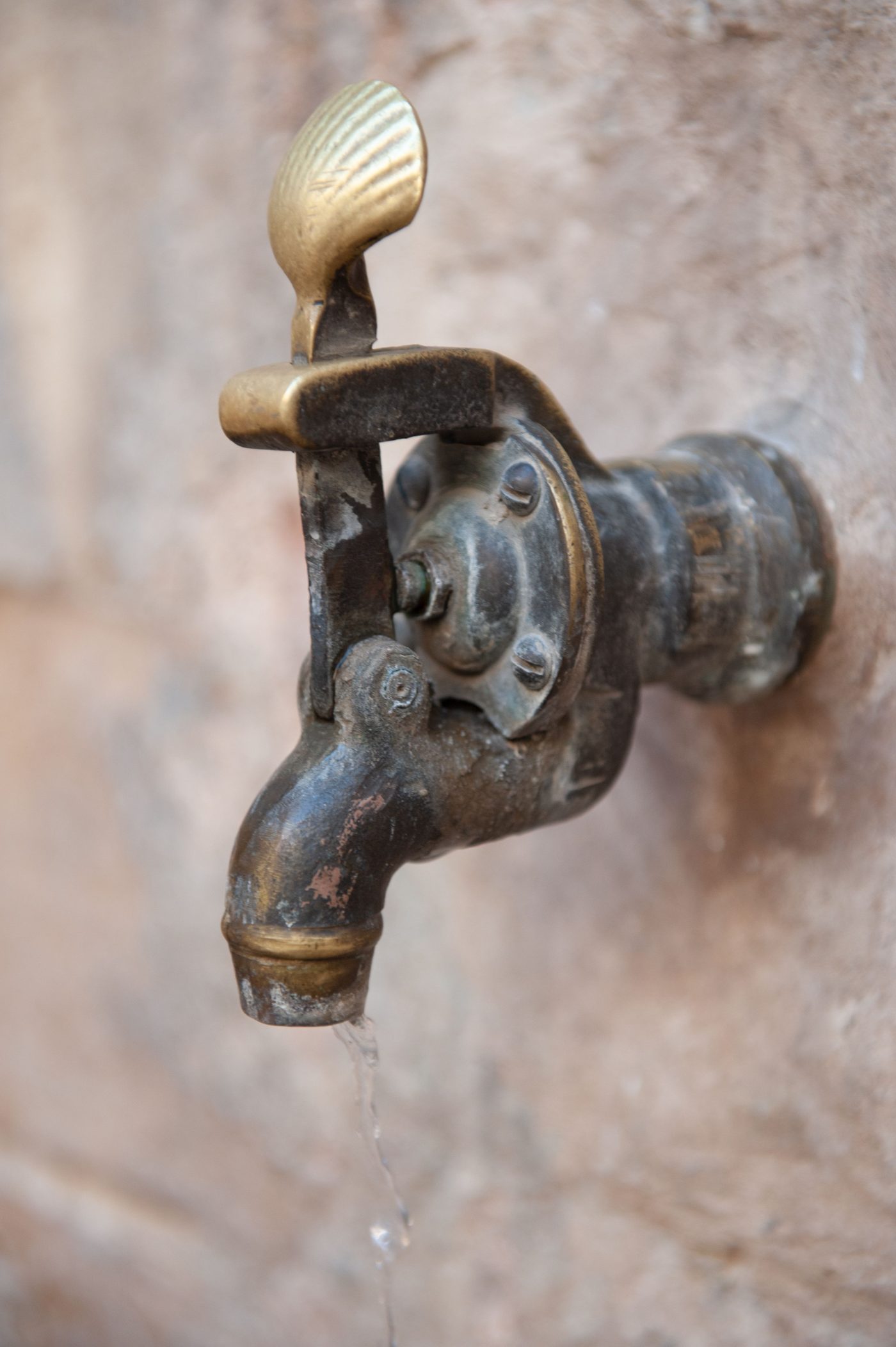
There are few worse moments in a plumbing emergency than reaching the stop tap and finding it will not move. It happens a lot in London. Stop taps sit untouched for years, and hard water quietly locks them in place.
Why stop taps seize
Thames Water says all the water in its region is hard, because it passes through chalk and limestone. Hard water leaves limescale on anything it touches. Inside a stop tap, scale builds up on the spindle, the washer and the seat. Corrosion adds to it on older brass valves. A valve that nobody has turned for ten years can end up feeling welded shut.
Another common problem is the opposite. The handle turns freely but the water does not stop. The jumper or washer inside has worn away or come loose, so turning the handle no longer closes anything.
Do not force it
The instinct is to grab a big spanner or a pair of grips and lean on it. Do not. Old stop taps are often made of brass, and the body or the spindle can snap. A seized valve that leaks a little becomes a broken valve spraying water at full mains pressure. Thames Water’s own advice is that you should not need to use excessive force.
Gentle things to try
- Turn it slowly clockwise, as far as it goes without strain.
- Work it back and forth. A small movement each way can break up scale. Stop if it feels like it might crack.
- Use a cloth to get a better grip on the handle rather than a tool.
- A little penetrating spray on the spindle where it enters the valve body may help.
- If it moves a little, keep working it a few degrees at a time.
If none of that works within a minute or two, stop and shut the water off another way.
Other ways to shut the water off
| Option | Where | Notes |
|---|---|---|
| Isolation valve near the leak | On the pipe to the toilet, basin, washing machine or boiler | Turns off just that fitting. Often a slotted screw, a quarter turn |
| Communal valve | Where the supply enters a block or conversion | Will turn off other flats. Warn them |
| Outside stop tap | Under a cover in the path or pavement | Needs a stopcock key. On a shared supply, cuts neighbours off too |
| Drain down | Open cold taps after the supply is off | Reduces water left in the pipes |
Thames Water also mentions that an accredited plumber can freeze a short section of pipe to stop the flow temporarily, which allows a new valve to be fitted without draining the whole system.
If neither the inside nor the outside valve works, Thames Water’s advice is to contact a plumber.
Fulham terraces and shared supplies
In Hammersmith and Fulham, 24.5% of households live in converted houses, according to the 2021 Census (Nomis, TS044). The classic SW6 conversion has an upper and a lower flat with two front doors side by side. Often there is one supply pipe and one outside stop tap for both.
If your inside stop tap is seized and you turn off the outside one, both flats lose water. Knock on your neighbour’s door first. Thames Water says shared supply pipes are the joint responsibility of the households served, so a seized valve on a shared section is a shared problem too. Our guide to stopcock keys and the outside stop tap explains how to use the outside valve safely.
Getting it fixed
A seized stop tap should be replaced, not just freed and left. Once a valve has seized, it is likely to seize again, or to leak from the spindle after being worked loose.
A plumber will shut off the water at another point, remove the old valve and fit a new one. If your stop tap is in an awkward place, such as under floorboards or behind kitchen units, this is a good time to move it or add an extra valve where you can reach it. Our stop tap help page explains the options.
Who is responsible
Thames Water says the inside stop valve is in your home, so it is your responsibility to install, maintain, fix and replace. If you rent, it is part of the water supply installation your landlord must keep in repair under section 11 of the Landlord and Tenant Act 1985. Report a seized valve in writing. A communal valve in a block is usually the freeholder’s.
Stop it happening again
Turn your stop tap off and on once a month. Thames Water recommends a monthly check. A quick turn keeps scale from locking it, and you will know it works the day you need it.
Quick questions
Can I use WD40 on a stuck stop tap?
A penetrating spray on the spindle can sometimes help free it, but it will not fix a valve seized inside. Do not then force it.
My stop tap turns but the water does not stop. Why?
The washer or the valve inside has worn or broken. The handle moves but nothing closes. It needs replacing.
How often should I turn my stop tap?
Thames Water suggests checking your inside stop valve monthly so you know it works when you need it.
Last updated 23 October 2026. Written for homes in London. Rules can change, so check the linked sources for the latest position.